Digital Marketing
The best offers for chiropractic advertising
Why “free consultation” isn't always your strongest offer — and what converts better. The best offers make the next step feel clear, relevant, and worthwhile.
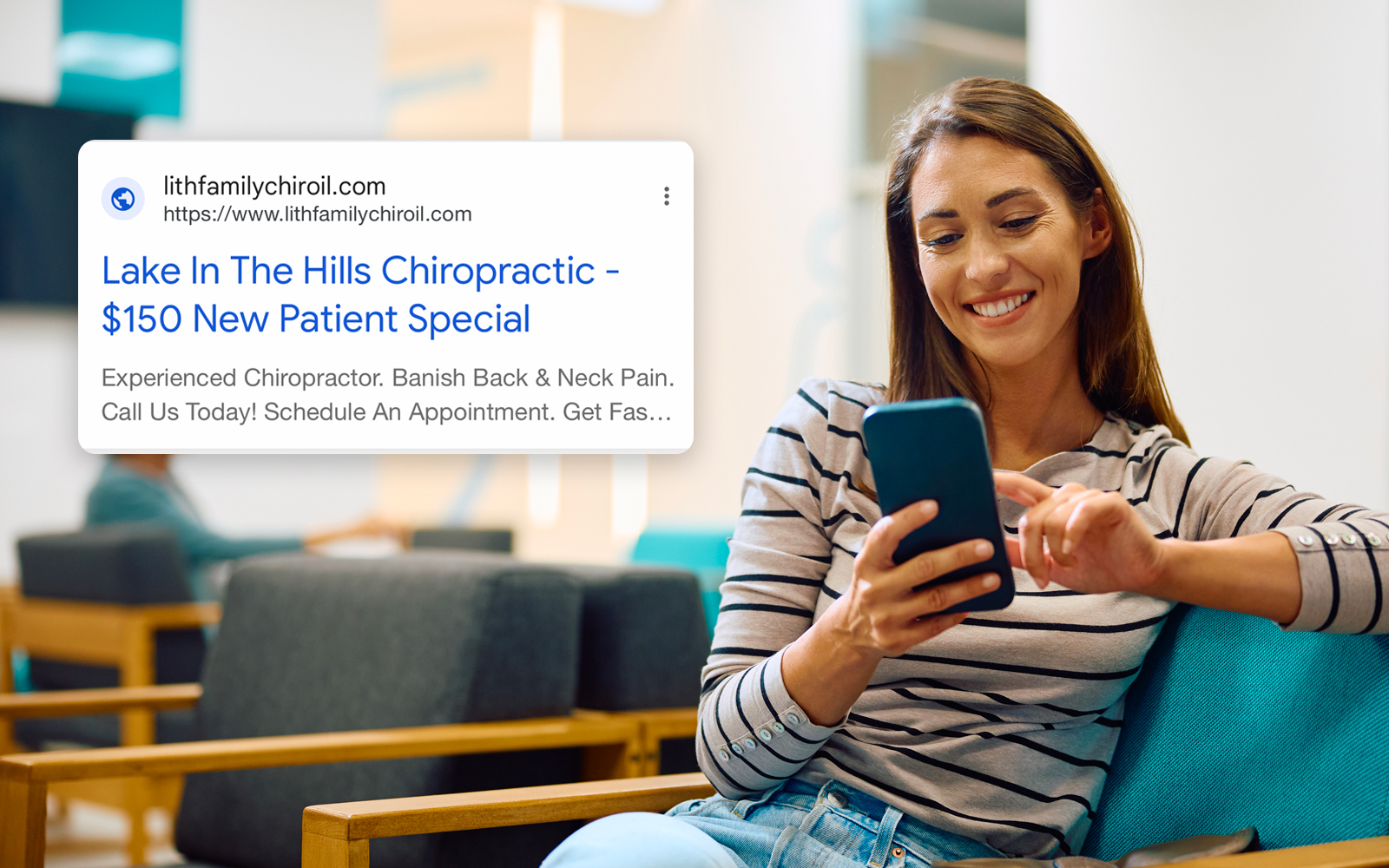
“Free consultation” sounds like an easy offer.
It costs the prospective patient nothing, it gives the practice a way to start a conversation, and it works across Google, Facebook, and Instagram. But there's one problem: most patients don't know what a free consultation actually means. Will they speak with the chiropractor? Receive an examination? Be pressured into a care plan? How long will it take?
When an offer creates more questions than answers, “free” may not be enough to make someone respond. The best chiropractic advertising offers aren't the cheapest — they're the ones that make the next step feel clear, relevant, and worthwhile.
“Free” describes the price. A strong offer explains the value.
Interactive · Offer builder
Build a better chiropractic advertising offer
Make six clear choices. Turn a vague promotion into an offer patients can understand — it updates live as you go.
Starting point
Free Consultation
Why it feels weak
Rebuild it below
Choose a recognizable audience — not everyone.
Pick a chip or type your own — keep it specific and respectful.
Name the appointment — not just “consultation.”
Select 2–3 things that actually happen — don't overpromise.
Focus on clarity and fit — not guaranteed outcomes.
One clear action — then optionally add price context.
Optional · price or commitment
Your offer
For your chosen audience
Your first-step visit
Experiencing a specific concern? Meet with a chiropractor to discuss your concerns so you can understand your next step.
Your offer in one sentence
For audience experiencing concern or situation, start with a first-step appointment where you'll experience one and experience two so you can realistic takeaway. call to action.
The problem with “free consultation”
A free consultation isn't automatically a bad offer. It becomes weak when it's presented without context. Consider two ads:
The first describes the price. The second describes the person, the problem, the appointment, and the purpose. That matters because someone seeing your ad may not be ready to choose a chiropractor — they may simply be trying to understand what's happening and whether your practice is a reasonable place to start. A strong offer helps them answer that.
A strong offer answers four questions
Before launching a campaign, make sure the offer answers four basics — the same four the builder above walks through.
1. Who is it for?
Broad offers are easy to ignore. Connect the offer to a recognizable audience or situation — desk workers with limited mobility, active adults who feel restricted, parents looking for a family practice — while keeping the language respectful. Google classifies personal-health content as sensitive and restricts condition-based personalized targeting, so build around geographic, contextual, and keyword targeting rather than implying you know an individual's condition.
2. What happens during the visit?
Don't make prospective patients guess. Explain what the first step includes — a brief conversation with the chiropractor, a review of their concerns, an explanation of the practice's approach. Only advertise services the practice actually provides, and don't imply an examination, diagnosis, or treatment unless it's truly included.
3. What will the person gain?
The benefit of an introductory offer isn't always immediate relief — often the value is clarity. A prospective patient may leave with a better understanding of whether your approach fits, what an evaluation involves, and what the next appointment would include. That's a more credible promise than suggesting a clinical outcome. The FTC evaluates the overall impression of an ad — words, images, testimonials, disclaimers — not one carefully worded sentence.
4. What happens next?
A strong offer removes uncertainty from the next step. Tell people what happens after they respond: “Choose an available time online. During the visit, we'll discuss your concerns, explain our approach, and determine whether a complete new-patient evaluation makes sense.” Clear expectations reduce friction.
Five offer structures worth testing
Don't choose an offer on lead cost alone
A low-cost lead isn't always a good lead. Compare two campaigns:
Campaign A may produce the cheaper form submission; Campaign B may produce the stronger patient-acquisition system. Track the whole journey — click, lead, contact, scheduled, attended, evaluation, patient started, revenue. The best offer produces the right conversations at a sustainable acquisition cost, not the most leads.
Test the offer before rebuilding the campaign
When ads underperform, practices often change audience, images, or budget first. Sometimes the real problem is the offer. Test meaningful variations — free consult vs. a named discovery visit, general vs. problem-specific, phone vs. in-office, free vs. modestly priced, appointment request vs. direct online scheduling. Change one major variable at a time so you can tell what actually moved the results.
The strategy is a first step that feels useful enough to take, simple enough to understand, and credible enough to trust.
At Lakeside, we help chiropractic and natural-health practices connect the offer, advertising, landing page, follow-up, scheduling, and lead tracking into one patient-acquisition system — because a strong ad does more than generate attention. It gives the right person a clear reason to start the conversation.
Turn your offer into a system
Let's turn your offer into a patient-acquisition system.
We connect the offer, ads, landing page, follow-up, and tracking into one measurable system for practices across the United States.
DEMO